
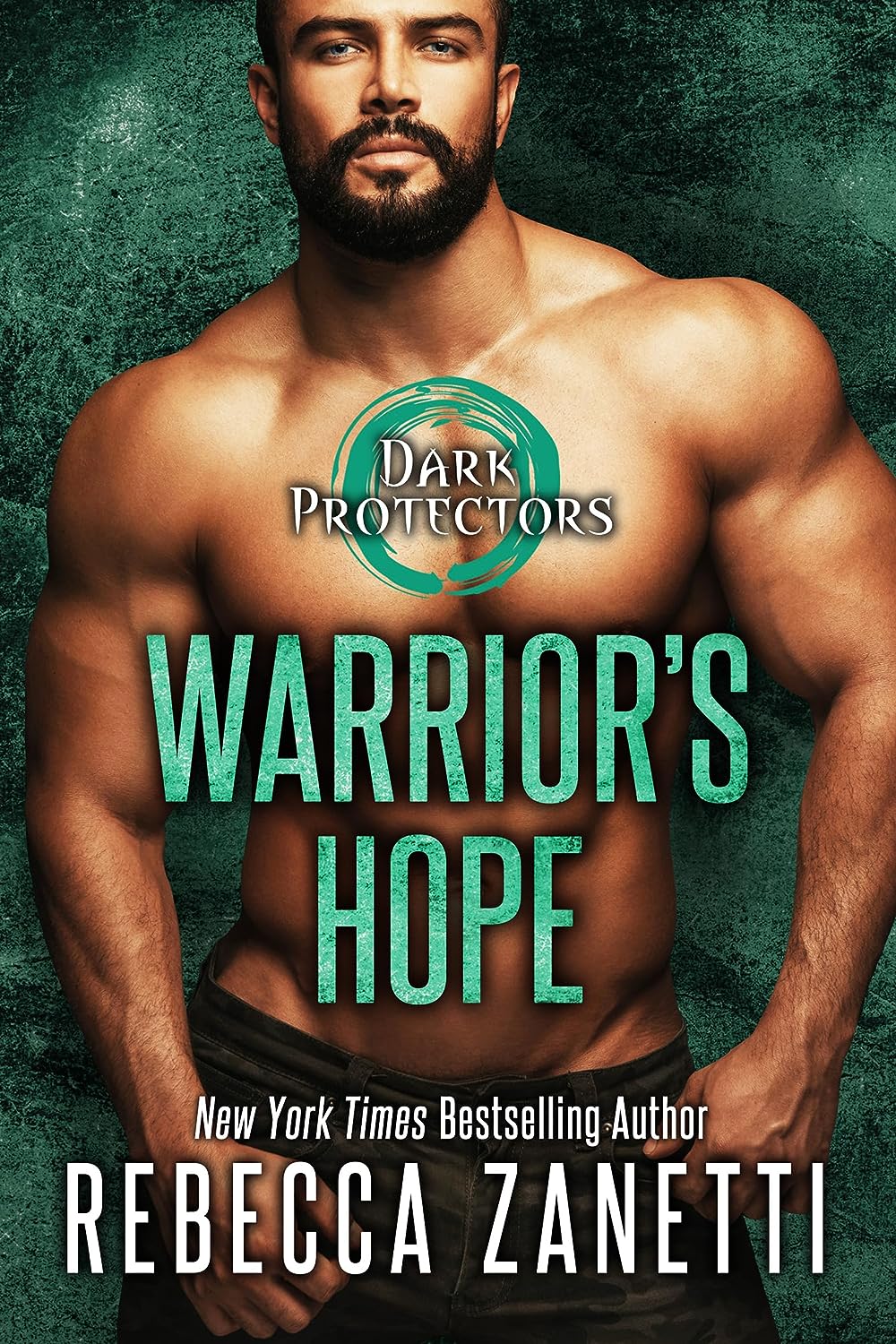
Rebecca Zanetti’s Warrior’s Hope takes one of the Dark Protectors series’ most important characters and puts her at the center of a conflict where romance, politics, prophecy, and the future of the immortal world are impossible to separate. As the series’ sixteenth book, it focuses on Hope Kayrs-Kyllwood, the first female vampire ever born and the heir to two powerful immortal families whose existence has carried enormous expectations from the beginning.
For me, what makes Hope’s story particularly compelling is that her romantic choices can’t remain personal. Her feelings for Drake, the leader of the Kurjan nation, and Paxton, her childhood friend and longtime protector, are tangled with political alliances, old loyalties, and the possibility of war, which gives the central love triangle consequences far beyond heartbreak.
Quick Review
Warrior’s Hope is an ambitious paranormal romance that places Hope Kayrs-Kyllwood between two men who represent very different futures. Drake sees a mating with Hope as a potential political alliance that could prevent war, while Paxton’s connection to her comes from years of friendship, protection, and unwavering devotion.
I loved the scale of the conflict because Hope isn’t simply deciding which man she wants. She’s trying to figure out who she is outside the prophecies, expectations, and family legacies that have surrounded her, while knowing her choice could alter relationships between entire supernatural factions.
The political tension also adds weight to the romance. Attraction and loyalty matter, but every emotional decision comes with questions of peace, power, sacrifice, and whether Hope should let others define her future because of what she represents.
Spoiler-Light Summary
Hope Kayrs-Kyllwood has never had the luxury of being ordinary. As the first female vampire ever born and the heir to two powerful immortal families, she has grown up surrounded by prophecy, political expectations, and the knowledge that her future may influence the balance of power throughout the immortal world.
Those pressures become even more complicated when Hope finds herself caught between Drake and Paxton. Drake leads the Kurjan nation and views mating with Hope as more than a romantic possibility because their union could become a strategic alliance capable of changing the course of the conflict between their peoples.
Paxton represents something very different. He’s Hope’s childhood friend and steadfast protector, and his devotion is rooted in a personal history that exists outside political negotiations and strategic alliances.
Hope’s feelings leave her trapped between paths carrying dramatically different consequences. Choosing between Drake and Paxton isn’t simply about deciding whom she loves because each possibility is connected to questions of loyalty, war, peace, and the destiny everyone around her seems determined to place in her hands.
Hope Kayrs-Kyllwood
Hope has one of the most complicated positions imaginable within the Dark Protectors world. She’s the first female vampire ever born, belongs to two formidable immortal families, and has spent her life connected to prophecies and expectations that make it difficult to separate what she wants from what everyone believes she should become.
I found her struggle with identity particularly interesting because extraordinary power doesn’t necessarily create personal freedom. In Hope’s case, her importance to the supernatural world means nearly every decision can be interpreted politically, creating tremendous pressure when she’s trying to make choices about something as intimate as love.
Her story also explores the burden of inherited expectations. Hope carries the legacies of the people and families who came before her, but Warrior’s Hope asks whether fulfilling those expectations should require her to surrender her ability to decide what kind of life she actually wants.
That conflict gives the character more depth than her unusual supernatural status alone could provide. Hope may hold extraordinary importance within the immortal world, but the emotional heart of her story lies in her attempt to claim ownership of a future everyone else already seems to have imagined for her.
Drake
Drake brings political calculation directly into the romantic conflict. As the leader of the Kurjan nation, he understands that a mating with Hope could carry consequences extending far beyond their personal relationship, and he sees their potential union as a way to create an alliance capable of preventing war.
That possibility makes his place in the love triangle especially complicated. Hope can’t evaluate her relationship with Drake without also considering what a union between them could mean for their people, making it hard to tell where genuine desire ends and political obligation begins.
I found that tension fascinating because Drake doesn’t simply represent another romantic option. He represents a possible future built on diplomacy, power, and a relationship that could reshape the immortal world’s political structure.
His position also forces Hope to confront a difficult question about sacrifice without reducing the conflict to an easy answer. A political union might offer peace, but the possibility of preventing war doesn’t automatically mean Hope should surrender control over something as personal as whom she chooses to love.
Paxton
Paxton stands in sharp contrast to the political implications surrounding Drake. His relationship with Hope is rooted in childhood friendship, loyalty, protection, and a history that predates the current conflict and forced her romantic future into the center of immortal politics.
His devotion adds another kind of emotional pressure to the story. Paxton isn’t offering Hope a strategic alliance between supernatural nations, but his long-standing connection with her carries its own expectations and complications because years of loyalty can create stakes just as powerful as political agreements.
What worked especially well for me was the contrast between what the two men represent. Drake is connected to the possibility of political transformation and peace between opposing groups, while Paxton is tied to familiarity, personal history, and the kind of devotion that has developed over years rather than through negotiation.
That difference makes Hope’s position more difficult because neither path can be dismissed as meaningless. Her choice carries emotional consequences regardless of what happens politically, keeping the romantic conflict tied to her personal identity rather than letting the larger supernatural war completely overwhelm it.
Hope, Drake, and Paxton
The love triangle is the emotional engine of Warrior’s Hope, but it works because each relationship represents something larger than simple attraction. Hope isn’t choosing between two interchangeable romantic interests; Drake and Paxton represent fundamentally different versions of her possible future.
Drake brings leadership, political strategy, and the potential for an alliance that could reshape the balance of power. Paxton brings personal history, protection, and a bond built over years of knowing Hope beyond the role she occupies within prophecy and supernatural politics.
That creates a romantic conflict with no obvious, consequence-free answer. Hope’s feelings matter, but so do the implications of choosing one future over another, and Zanetti uses that pressure to make the triangle part of the larger story rather than a romantic complication pasted onto it.
For me, the most interesting element is that Hope has to decide how much responsibility she owes everyone else. Being powerful enough to influence the fate of the immortal world doesn’t necessarily mean she should build her personal life around what other people believe would best serve that world.
Love, Politics, and the Possibility of War
The political dimensions of Warrior’s Hope give the book a particularly large scope. Alliances are fragile, loyalties aren’t always simple, and the line between potential friends and enemies grows harder to draw as the supernatural factions move closer to confrontation.
Drake’s interest in using a mating with Hope as a path toward peace captures the central dilemma particularly well. A romantic relationship could potentially become a political solution, but treating love as diplomacy introduces its own dangers because Hope’s happiness risks becoming another resource to be negotiated.
I liked that the story doesn’t isolate these political questions from the romance. Hope’s emotional life has political consequences precisely because of who she is, which means every development between her, Drake, and Paxton reverberates through the larger conflict.
The result is a story where personal and political stakes continually collide. Hope may be making decisions about her heart, but those decisions unfold in an immortal world already preparing for war.
Destiny and Personal Choice
Prophecy has always carried a dangerous implication in stories like this because knowing someone is important can easily become an excuse to deny that person agency. Hope’s extraordinary heritage makes her valuable to multiple factions, but Warrior’s Hope emphasizes the difference between being destined for something and willingly choosing it.
That distinction became one of the most compelling parts of the story for me. Hope has inherited power and responsibility, but she still has to decide whether the future everyone expects of her is the future she wants.
Her romantic dilemma makes that internal struggle unavoidable. Choosing Drake because of political necessity would carry one meaning, while choosing Paxton because of personal history would carry another, yet neither decision matters emotionally unless Hope believes it belongs to her.
The larger conflict therefore becomes a story about agency as much as supernatural power. Hope’s importance isn’t simply that she may affect the future of the immortal world, but that she has to claim the right to decide how she participates in shaping it.
Legacy, Identity, and Immortal Expectations
As the heir to two powerful immortal families, Hope has enormous influence, but it also comes with expectations that began before she was old enough to understand them. Her identity has been shaped by what she represents to other people, which makes separating Hope the woman from Hope the symbol increasingly important.
I enjoyed the way this tension expands the book beyond the immediate love triangle. The romantic conflict becomes another expression of a larger problem Hope has faced throughout her life, since almost everyone around her has a reason to care about what she does and whom she chooses.
That pressure also raises questions about inheritance and responsibility. Hope can’t erase her family history or the power attached to her existence, but she can decide whether those things should completely determine who she becomes.
For me, that makes Warrior’s Hope as much a story about identity as romance. Hope’s journey asks whether someone born into extraordinary circumstances can honor the people and legacies that shaped her without allowing those legacies to consume her individual desires.
The Supernatural Political Landscape
The broader supernatural conflict gives Warrior’s Hope the feeling of a story approaching a major turning point. Long-standing tensions, unstable alliances, competing factions, and the gathering possibility of a larger showdown all contribute to a sense that decisions made here could reshape the world established throughout the series.
That scale works particularly well with Hope as the central character. Because she has connections to powerful families and occupies such a unique position among the immortals, she’s one of the few characters whose romantic and personal choices can plausibly carry consequences across multiple factions.
Zanetti also uses political uncertainty to complicate traditional ideas about heroes and enemies. The distinction between friend and foe isn’t always as clean as it first appears, which makes alliances more interesting and gives Hope another reason to question whether inherited loyalties should determine every decision she makes.
I found that ambiguity much more compelling than a straightforward battle between clearly defined sides. When political survival requires negotiation, compromise, and occasionally trusting people who were once considered enemies, romance becomes another arena where old assumptions can be challenged.
Action and Emotional Stakes
Warrior’s Hope continues the Dark Protectors tradition of blending romance with dangerous supernatural conflict. The possibility of war keeps the story moving while giving Hope’s personal decisions an urgency that wouldn’t exist if the love triangle were unfolding in isolation.
What worked for me was the way the emotional stakes and action stakes reinforce each other. Hope’s feelings affect political possibilities, while the political conflict makes it increasingly difficult for her to tell whether the people around her are protecting her, using her, or both.
The larger confrontation also gives the novel a sense of culmination. As alliances shift and the forces surrounding Hope prepare for what may become an enormous battle, her personal struggle becomes inseparable from questions about what kind of future the immortal world will have.
Tropes and Genres
- Paranormal Romance
- Vampire Romance
- Supernatural Romance
- Love Triangle
- Childhood Friends
- Protector Romance
- Political Alliance
- Duty Versus Desire
- Prophecy and Destiny
- Powerful Heroine
- Supernatural Politics
- Immortal Families
- Loyalty and Sacrifice
- War Between Supernatural Factions
- Friends-to-Lovers Elements
- Forbidden and Complicated Love
- Action Romance
- Romantic Suspense
What I Loved
I loved that Hope’s romantic dilemma has consequences beyond deciding which relationship offers the strongest chemistry. Her unique position in the supernatural world means choosing a partner can shape alliances and potentially affect whether entire factions move toward peace or war.
The contrast between Drake and Paxton also gives the triangle genuine narrative purpose. They don’t merely compete for Hope’s attention because each man represents a different type of relationship and a different possible future, which makes Hope’s decision feel connected to her larger struggle for identity.
I also enjoyed seeing a female character with enormous power confront the uncomfortable reality that power doesn’t always create freedom. Hope may be capable of influencing the future of the immortal world, but that importance also gives others even more reason to interfere with how she chooses to live.
The mixture of romance and supernatural politics works especially well because neither side of the story feels completely separate from the other. Every shift in Hope’s relationships can change the political landscape, while every political development adds pressure to her personal choices.
What Might Not Work for Every Reader
Readers who dislike love triangles may struggle with the central romantic conflict because Hope’s feelings for Drake and Paxton are fundamental to the story. The triangle isn’t a minor misunderstanding that disappears quickly, since both relationships tie into major emotional and political stakes.
The amount of supernatural politics may also be heavier than some romance readers prefer. Alliances, prophecies, family legacies, factional conflicts, and the threat of war all play significant roles, so the romance unfolds inside a complicated larger mythology rather than functioning as an isolated love story.
Readers who prefer a heroine whose romantic decisions remain entirely private may also find Hope’s situation frustrating by design. Almost everyone has an opinion about what her future should look like because her heritage and power make her choices important to people far beyond her immediate relationships.
For established Dark Protectors readers, that complexity is likely part of the appeal because Hope’s story carries the weight of a long-running supernatural world. Readers arriving without that history may still understand the central conflict, but the significance of families, factions, and long-established relationships may naturally carry more meaning for those already familiar with the series.
Standalone Status and Series Placement
Warrior’s Hope is the sixteenth book in Rebecca Zanetti’s Dark Protectors series. Its story involves established immortal families, ongoing political conflicts, prophecy, and supernatural factions whose relationships have developed across a much larger saga.
Because so much of Hope’s importance comes from her heritage and the history of the immortal world, readers familiar with the earlier installments likely have more context for the stakes attached to her decisions. The central romantic and political conflict remains focused on Hope, Drake, and Paxton, but this installment clearly belongs to a broader continuing story.
Who Should Read Warrior’s Hope
I think Warrior’s Hope will appeal most to readers who enjoy paranormal romance with large-scale worldbuilding and political stakes. It’s particularly suited to readers who like powerful heroines, complicated love triangles, supernatural factions, prophecy, and romances where personal choices can influence entire societies.
Readers who enjoy stories about duty conflicting with desire should also find a lot to appreciate. Hope is continually forced to consider whether love should serve political necessity, family expectations, supernatural destiny, or her own happiness, and that tension drives both the romance and the larger plot.
Fans of action-heavy paranormal romance should also feel at home here because the romantic storyline develops alongside the possibility of major supernatural conflict. The book blends emotional tension with shifting alliances and an approaching confrontation, giving Hope’s decisions urgency throughout the story.
Final Thoughts
Warrior’s Hope gives Hope Kayrs-Kyllwood a story worthy of the extraordinary role she occupies within the Dark Protectors universe. As the first female vampire ever born and the heir to two powerful immortal families, she’s spent her life surrounded by destiny, but this installment forces her to decide how much of that destiny she’s actually willing to accept.
For me, the love triangle works best as an extension of that struggle rather than simply a competition between two men. Drake represents a relationship with enormous political potential, while Paxton represents loyalty, personal history, and a connection rooted in the life Hope has actually lived.
The stakes surrounding those relationships turn Hope’s romantic decision into a larger examination of power, sacrifice, and agency. She may be able to influence peace, war, and the future of the immortal world, but the story keeps returning to whether that power means she owes everyone else control over her heart.
Rebecca Zanetti combines supernatural politics, romantic tension, prophecy, and the possibility of war into an installment with a strong sense of culmination. Warrior’s Hope ultimately becomes a story about a woman surrounded by people who believe they understand her destiny, while she struggles to determine whether destiny means anything if she isn’t allowed to choose it for herself.
FAQ
What is Warrior’s Hope by Rebecca Zanetti about?
Warrior’s Hope follows Hope Kayrs-Kyllwood, the first female vampire ever born and the heir to two powerful immortal families. Her romantic feelings for Drake and Paxton become intertwined with supernatural politics, prophecy, fragile alliances, and the possibility of a war that could reshape the immortal world.
Who are the main characters in Warrior’s Hope?
Hope Kayrs-Kyllwood is the central character, with Drake and Paxton forming the two sides of the novel’s major romantic conflict. Drake is the leader of the Kurjan nation, while Paxton is Hope’s childhood friend and longtime protector.
What book is Warrior’s Hope in the Dark Protectors series?
Warrior’s Hope is book sixteen in Rebecca Zanetti’s Dark Protectors series. The story builds on the established supernatural families, political factions, and long-running mythology of the series.
Is Warrior’s Hope a love triangle romance?
Yes, a significant part of Hope’s story involves her feelings for both Drake and Paxton. The triangle carries unusual weight because her romantic choice is connected to political alliances, the possibility of peace, and the future balance of power among the immortal factions.
Who is Drake in Warrior’s Hope?
Drake is the leader of the Kurjan nation and one of the two men connected romantically to Hope. He sees a potential mating with her as both a personal relationship and a strategic alliance that could help prevent war.
Who is Paxton in Warrior’s Hope?
Paxton is Hope’s childhood friend and steadfast protector, and his devotion to her has developed over years of shared history. His relationship with Hope contrasts with Drake’s politically significant connection by representing familiarity, loyalty, and a deeply personal bond.
Is Warrior’s Hope spicy?
The book is presented as continuing the Dark Protectors series’ established emphasis on sensual romance, spicy romantic interplay, and sexually charged relationships. The information available supports describing it as a steamy paranormal romance, but it doesn’t support assigning a precise numerical spice rating.
Can Warrior’s Hope be read as a standalone?
Warrior’s Hope centers on Hope’s romantic and personal conflict, but it’s also the sixteenth installment in a long-running supernatural series. Readers familiar with the earlier books are likely to have additional context for Hope’s family history, the political factions, the prophecy surrounding her, and the larger conflict approaching its climax.
Does Warrior’s Hope have a love story as well as supernatural action?
Yes, the romantic conflict between Hope, Drake, and Paxton is closely tied to the supernatural action and political storyline. The possibility of war, shifting alliances, and Hope’s importance to multiple factions give the romance consequences that extend far beyond the three characters involved.
What are the main themes in Warrior’s Hope?
The novel explores destiny, personal choice, inherited responsibility, loyalty, sacrifice, political power, and the tension between love and duty. Hope’s story is especially focused on whether someone burdened with extraordinary expectations can still claim the freedom to decide what kind of life and love she wants.