
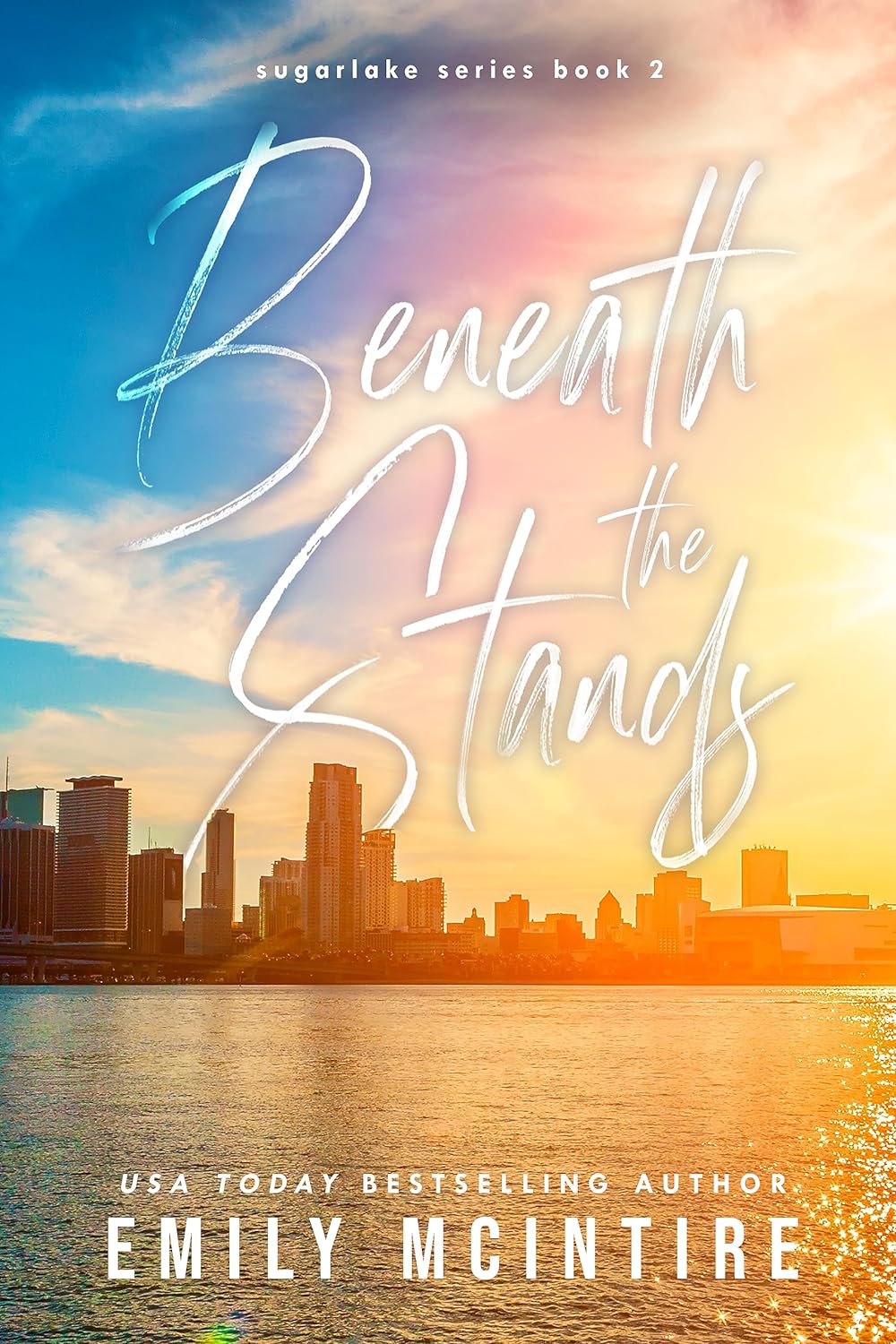
Beneath the Stands by Emily McIntire is the second installment in the Sugarlake series, and it delivers one of those emotionally messy romances where love, resentment, guilt, family expectations, and bad timing have been tangled together for years. Elliot “Eli” Carson and Rebecca “Becca” Sanger have known each other most of their lives, but familiarity has never made their relationship easy.
They are drawn to each other despite having every reason to keep their distance, and both are living versions of their lives that feel incomplete. Eli has lost the basketball future that once defined him, while Becca is fighting against the expectations attached to being a preacher’s daughter and the disappointment her family seems determined to place on her shoulders.
Their story eventually becomes much larger than the attraction between them. Beneath the Stands is about guilt, family control, self-worth, grief, forgiveness, and whether two people can finally choose each other after spending years allowing fear and circumstance to make those choices for them.
I was completely engrossed by this book. Becca and Eli frustrated me at times, but that frustration came from understanding how much history and emotional damage stood between them, which made me root even harder for them to finally stop hiding from the things they wanted.
Beneath the Stands Quick Review
Beneath the Stands is an emotional contemporary romance built around Eli Carson, a former basketball prodigy whose career ends after a devastating injury, and Becca Sanger, the preacher’s daughter who has spent much of her life trying to escape the version of herself her family expects. Their relationship moves through attraction, resentment, secrecy, heartbreak, separation, and eventually a second chance that forces both of them to confront the lives they have settled for.
The basketball setting gives the first part of their relationship structure, with Eli accepting a coaching position at Florida Coast University and Becca becoming the team manager so she can remain enrolled. The sports element is important, but the emotional story quickly becomes much bigger than what happens on the court.
What worked especially well for me is how grounded the conflict feels. The drama does not depend entirely on exaggerated misunderstandings or a convenient villain repeatedly stepping between the couple, because many of the obstacles come from family dynamics, guilt, insecurity, grief, and the choices Becca and Eli make when they are afraid.
The result is a romance that hurts in ways that feel personal. There were family moments that hit me particularly hard, and by the end I had the kind of book hangover that comes from spending so much time emotionally invested in two flawed people who desperately need to stop punishing themselves.
Beneath the Stands Summary
Eli Carson once believed basketball would define his future. He had the talent to become a standout player, but a career-ending injury destroys that path and forces him to rebuild his identity around something other than the dream he had spent years pursuing.
Rather than remaining trapped in the life he lost, Eli accepts a coaching position at Florida Coast University. Coaching gives him a way to stay connected to basketball, but it also places him on a completely different side of the sport and forces him to confront what remains after the identity of promising athlete is gone.
Becca Sanger arrives at FCU carrying a different kind of pressure. As a preacher’s daughter, she has spent years surrounded by expectations about who she should be, what choices she should make, and how closely her life should conform to the image her family considers acceptable.
She chooses differently.
That decision comes with consequences when her family cuts her off financially, leaving Becca responsible for finding a way to remain enrolled. Becoming the basketball team manager gives her that opportunity, but it also puts her directly in Eli’s orbit.
That is the last place either of them needs to be.
Becca and Eli have known each other for most of their lives, yet their history has never translated into an easy friendship. There is irritation, resentment, and a stubborn awareness of each other that neither has been particularly successful at ignoring.
Being forced into regular contact at FCU intensifies everything they have been resisting. Their arguments and hostility sit beside undeniable attraction, and the line separating dislike from desire becomes increasingly difficult to maintain.
Eventually, they stop pretending the chemistry is not there.
What follows is passionate, complicated, and emotionally dangerous because neither Becca nor Eli is particularly good at revealing the parts of themselves they keep hidden. Both are living with secrets, insecurity, and expectations that make vulnerability feel risky.
Their happiness does not last.
A tragedy tears them apart, leaving behind pain neither is equipped to handle well. Instead of moving through that pain together, they become separated by it, and the future they might have built disappears beneath grief, guilt, and unresolved feelings.
Years later, Becca is back home and living a life that feels painfully small compared with the person she once tried to become. She is once again under the influence of her parents, and the independence she fought for has been replaced by a routine that does not feel entirely like her own.
Then Eli returns.
He is no longer simply the man connected to Becca’s past because he comes back with a fiancée and a wedding that needs to be planned. Becca ends up involved in those preparations, which forces her into prolonged contact with the person she has never truly stopped carrying with her.
The reunion brings years of unresolved emotion back to the surface. Anger and hurt remain, but so does the connection neither of them managed to erase during their time apart.
Their second chance becomes a test of whether either character has actually learned from the past. Loving each other was never enough on its own, and if Becca and Eli are going to find their way back to one another, they have to confront the guilt, family pressure, insecurity, and hidden truths that helped destroy them the first time.
Rebecca “Becca” Sanger
Becca is one of those heroines who can be frustrating precisely because her choices feel rooted in emotional wounds that are easy to understand. She wants independence, but years of family expectations have taught her to question herself whenever her desires conflict with what the people around her believe she should want.
Being the preacher’s daughter adds a particular kind of pressure. Becca is not simply trying to satisfy her parents, because she is also living under the weight of an identity other people believe should reflect their values and reputation.
Her decision to pursue her own path comes at a real cost when she is cut off financially. That choice establishes something important about her character because Becca is willing to struggle for independence, even when she does not always know how to sustain that confidence once life becomes painful.
Her relationship with Eli exposes both her strength and her insecurity. She can challenge him, resist him, and push against the attraction between them, but emotional vulnerability becomes much harder when it requires admitting what she truly wants.
The tragedy between them magnifies those weaknesses. Becca retreats into guilt and eventually returns to a life that places her back under the control she once fought so hard to escape, which made her later circumstances especially heartbreaking for me.
What I appreciated is that Becca’s story is not simply about choosing Eli. She has to choose herself again, because loving someone fully is nearly impossible while she is still living according to fear, obligation, and other people’s expectations.
Elliot “Eli” Carson
Eli begins from a different kind of identity crisis. Basketball was not simply something he enjoyed, because being talented at the sport had shaped the future he believed was waiting for him.
A career-ending injury destroys that certainty.
Accepting a coaching position at Florida Coast University shows that Eli is capable of adapting, but coaching is not the same as playing. Staying close to the game means constantly living beside the version of his future he lost, and that grief adds another layer to the man Becca encounters.
Eli’s relationship with Becca is complicated by the fact that he already knows enough about her to push exactly the wrong buttons. Their shared history gives their arguments an intimacy that strangers would not have, while their attraction makes every confrontation feel charged with something neither wants to acknowledge.
He is not emotionally uncomplicated, and the story does not ask the reader to pretend otherwise. Eli can be frustrating, stubborn, and capable of making decisions that hurt Becca, but those flaws also keep him from feeling like an idealized romantic hero who exists only to rescue her from her family.
His emotional journey requires him to confront what he lost, what he regrets, and what he has allowed guilt to dictate. The second chance with Becca cannot work if he continues approaching the future through the pain of what happened before.
That is one of the things I liked most about him. Eli does not simply need to convince Becca that he still loves her, because he has his own work to do before that love can become something healthier than the relationship they lost.
Becca and Eli’s Relationship
Becca and Eli work because their relationship has layers built long before the main romance begins. They have history, attraction, irritation, assumptions, and emotional baggage before either is willing to consider what being together might actually mean.
Their early dynamic has strong enemies-to-lovers energy, although the hostility is complicated by the fact that they have known each other for years. They understand enough about each other to make every argument personal, and that familiarity gives their chemistry more weight than a relationship built entirely from first impressions.
The college setting forces them into the same orbit through basketball. Eli is coaching, Becca is managing the team, and neither can simply avoid the other when irritation becomes uncomfortable.
That proximity gives their attraction room to intensify. Their relationship is passionate, but the more interesting part for me is how quickly physical chemistry exposes emotional vulnerability neither seems prepared to handle.
They are both living inauthentically in different ways.
Becca is fighting family expectations while still carrying the damage those expectations created. Eli is rebuilding himself after losing the athletic identity that once gave his life direction.
The relationship gives each of them a glimpse of something freer. That does not mean they are ready for it.
When tragedy strikes, the weaknesses already present in the relationship become impossible to ignore. Love does not automatically give them the emotional tools to survive guilt and grief together, which is one reason their separation feels painful instead of manufactured.
The second-chance portion of the story works because those problems do not disappear simply because time has passed. Becca and Eli have to confront the fact that years of separation did not erase the feelings between them, but unresolved love is not the same thing as being ready to build a life together.
The Basketball Setting and Eli’s Lost Future
Basketball gives Beneath the Stands more than an attractive sports backdrop. Eli’s injury changes the entire direction of his life, which means the sport becomes connected to grief, identity, ambition, and the challenge of finding value after the future he expected disappears.
His coaching position at Florida Coast University keeps him close to basketball without allowing him to return to the role he once imagined. That creates a bittersweet relationship with the game because Eli is still part of the world he loves while constantly being reminded that his place within it has changed.
Becca’s work as the team manager gives the sport another function. Basketball becomes the mechanism that repeatedly puts her near Eli, creating the forced proximity their complicated relationship needs to move from old resentment into something much more intimate.
I liked that the sports setting serves the emotional story instead of overwhelming it. The book does not need to become a detailed basketball narrative because the more important question is how Eli rebuilds himself after losing the future that basketball once promised.
Family Expectations and Becca’s Fight for Independence
Becca’s family conflict is one of the parts of the book that affected me most. Her parents’ expectations shape how she sees herself, and their willingness to use financial support as leverage makes her independence feel both necessary and frightening.
Being cut off for choosing her own path demonstrates how conditional family approval can become when a child’s decisions challenge the identity a family has created for her. Becca’s struggle therefore extends beyond simple rebellion because she is trying to determine whether love and acceptance are still meaningful when they depend on obedience.
That pressure follows her even after college.
When Becca eventually finds herself back home and once again living under her parents’ control, the situation feels especially painful because she had already fought so hard to escape that version of her life.
Her return does not mean she suddenly becomes weak. It shows how guilt, grief, and emotional exhaustion can wear down even someone who once fought fiercely for independence.
That aspect of the story felt painfully believable. People do not always move forward in clean lines, and sometimes trauma sends them back toward familiar structures even when those structures were never particularly healthy.
Guilt Shapes Both Characters
Guilt becomes one of the most important emotional forces in Beneath the Stands. Becca and Eli are not simply separated by geography or bad timing, because the tragedy between them leaves both carrying feelings they do not know how to process.
That guilt changes how they understand themselves.
Instead of allowing grief to remain something painful that happened to them, it becomes something they incorporate into their identities and decisions.
The result is emotional paralysis.
Becca settles into a life that feels smaller than what she once wanted, while Eli moves forward in ways that do not necessarily mean he has fully confronted what happened.
Their reunion eventually forces both to recognize that punishment is not the same thing as healing. Holding onto guilt may feel like taking responsibility, but it can also become an excuse to remain trapped.
That theme is one of the reasons the second-chance romance works so well for me. Becca and Eli do not simply need another opportunity to date. They need another opportunity to stop defining themselves by what went wrong.
The Second Chance Feels Earned
Second-chance romance works best when the original relationship failed for reasons significant enough to justify the separation. If two characters could have solved everything with one simple conversation, years of heartbreak can feel manufactured.
That is not what happens here.
Becca and Eli are dealing with tragedy, family pressure, insecurity, secrets, and emotional wounds that neither is prepared to navigate properly when they first fall in love.
Time alone does not fix those issues. Their reunion simply creates another opportunity to confront them.
I appreciated that distinction because unresolved attraction is not treated as proof that they should automatically reunite. They have to decide whether the people they have become are capable of building something different from what they had before.
The wedding-planning situation makes that tension even sharper.
Becca is being asked to stand close enough to Eli’s future to imagine him marrying someone else, while Eli is forced to spend time with the woman whose absence still carries emotional weight.
That is a painful setup, but it works because it places their unresolved history directly in front of them.
Neither can continue pretending the past is finished.
The Wedding Planning Conflict Raises the Emotional Stakes
Eli’s return with a fiancée creates one of the story’s most emotionally uncomfortable situations. Becca is not simply reconnecting with an old love, because she is being pulled into the preparations for a future that appears to exclude her entirely.
Planning the wedding forces Becca to confront what she lost in a tangible way. Every detail of the celebration represents a life Eli is supposedly building with someone else, which makes the unresolved feelings between them much harder to dismiss.
What keeps this conflict from feeling like cheap third-party drama is the emotional history underneath it. The fiancée is not the only obstacle between Becca and Eli, because their real problems existed long before another relationship entered the picture.
The tension therefore remains centered on them.
They have to decide what their history means, whether their feelings are still genuine, and whether either has changed enough to stop repeating the same emotional patterns.
Authenticity Is One of the Strongest Themes
Both Becca and Eli spend portions of the story living lives that do not completely reflect who they are. Becca’s family expectations encourage her to suppress parts of herself, while Eli has to rebuild his identity after the athletic future he expected disappears.
Their relationship becomes a space where those false versions of themselves become harder to maintain.
Becca cannot fully love Eli while pretending she is content with a life chosen by guilt and parental control. Eli cannot build a healthy future while remaining emotionally defined by loss and regret.
That makes authenticity an important part of their romantic development.
Choosing each other ultimately means being honest about what they want, but it also requires becoming honest about who they are when fear and other people’s expectations are removed.
I found that theme especially moving because it gives the romance a purpose beyond simply reuniting two people with strong chemistry.
Becca and Eli are not only trying to recover an old relationship. They are trying to recover versions of themselves that disappeared somewhere along the way.
The Emotional Realism Makes the Story Hurt More
One of the reasons Beneath the Stands left such a strong impression on me is that many of its conflicts feel emotionally recognizable. The book uses dramatic circumstances, but the pain underneath them often comes from very ordinary fears involving disappointment, guilt, family approval, and the possibility of choosing the wrong future.
That made some of the family material surprisingly difficult for me to read. The emotional reactions did not feel inserted simply to create drama.
They felt connected to the way people behave when love, obligation, resentment, and guilt have been mixed together for years.
Becca and Eli also make mistakes that can be frustrating without feeling completely unbelievable.
I wanted them to communicate better. I wanted them to stop punishing themselves. I wanted them to recognize what was obvious from outside their relationship.
That frustration actually increased my investment because their eventual progress felt like something they had to earn.
Beneath the Stands Tropes and Genres
The strongest elements include:
- Contemporary romance
- Sports romance
- Basketball romance
- Second-chance romance
- Enemies-to-lovers elements
- Childhood history
- Sister’s best friend
- Forced proximity
- College setting
- Coach hero
- Team manager heroine
- Preacher’s daughter
- Forbidden attraction
- Family pressure
- Parental control
- Career-ending injury
- Grief
- Guilt
- Emotional healing
- Hidden secrets
- Wedding planning
- Lost love
- Personal growth
- Forgiveness
- Complicated family dynamics
- Happily-ever-after journey
What I Loved About Beneath the Stands
The emotional messiness is the biggest strength for me. Becca and Eli are flawed enough to make terrible decisions, but their mistakes usually come from wounds and insecurities that make sense within the lives McIntire has built for them.
I also loved the way the relationship develops across different stages of their lives. Seeing them first collide at Florida Coast University and then confront one another again years later gives the romance enough history for the second chance to carry real weight.
Becca’s family storyline affected me more than I expected. Her struggle between independence and the desire for family acceptance is painful because those needs are not mutually exclusive.
She wants to become her own person without having to stop loving the people whose expectations are hurting her.
Eli’s basketball arc gives him equally meaningful internal conflict.
Losing a career before it properly begins forces him to answer questions about identity that have nothing to do with Becca, which makes him feel like a complete character rather than simply the man waiting to fall in love with her.
The second-chance portion also worked extremely well for me.
By the time Becca and Eli are thrown together again, there is so much unresolved emotion between them that even ordinary interactions carry years of grief, anger, longing, and regret.
I finished the book emotionally exhausted in the best possible way.
It gave me a genuine book hangover, and I was already ready to move on to Jax’s story.
What Might Not Work for Every Reader
Becca and Eli can both be frustrating, particularly when fear and guilt prevent them from communicating as openly as the reader wants them to. Anyone who prefers characters who quickly recognize their mistakes and immediately talk through them may find portions of the story emotionally exhausting.
The family dynamics are also heavy.
Becca’s relationship with her parents involves control, disappointment, financial consequences, and the pressure of living under an identity shaped by religious and familial expectations.
That material may hit especially hard for readers with similar experiences.
The tragedy separating Becca and Eli gives the second-chance romance considerable emotional weight, but it also makes the book much heavier than a light sports romance.
Readers coming primarily for basketball and banter should expect grief, guilt, family conflict, and painful emotional consequences to occupy a significant portion of the story.
The wedding-planning setup may also make some readers uncomfortable because Eli returns with a fiancée.
For me, the conflict works because the deeper obstacles remain Becca and Eli’s unresolved history rather than relying entirely on romantic competition.
Standalone Status and Series Placement
Beneath the Stands is the second installment in Emily McIntire’s Sugarlake series. The story focuses on Becca and Eli, while the larger series provides a shared world and continuing connections between characters.
This installment also leaves me eager to continue with Jax’s story. The supporting relationships create enough interest in the broader cast that finishing Becca and Eli’s romance feels satisfying without eliminating curiosity about what comes next.
Who Should Read Beneath the Stands
Beneath the Stands should appeal to readers who enjoy contemporary romance with strong emotional stakes and characters who have to work through significant personal baggage before they can build a future together. It is especially suited to readers who like sports romance, second chances, complicated family dynamics, college relationships, lost love, forced proximity, grief, guilt, and romances that unfold over multiple stages of the characters’ lives.
Readers who enjoy flawed protagonists should also find a lot to appreciate. Becca and Eli are not always easy to agree with, but their imperfections make the emotional payoff stronger because neither can reach the ending without confronting uncomfortable truths about themselves.
Beneath the Stands Review: Final Thoughts
Beneath the Stands hit me much harder than I expected because Becca and Eli’s story is not simply about two people finally admitting they love each other. Their relationship is tied to identity, family, ambition, grief, guilt, and the painful reality that love can be genuine even when two people are not yet emotionally equipped to keep it.
Becca’s journey stayed with me because she spends so much of the story caught between independence and belonging. She wants to live according to her own values, but separating from the expectations of her family comes with emotional and practical consequences that make freedom much more complicated than simply walking away.
Eli is dealing with a similar loss of identity from another direction.
Basketball gave him a future until his injury took that future away, forcing him to become someone new before he had any reason to question the person he expected to be.
Their attraction brings those two struggles together. They recognize something in each other that feels honest, but honesty in one relationship cannot immediately undo years of insecurity and emotional conditioning.
That is why their first chance is not enough. The tragedy that separates them does more than create heartbreak.
It exposes every weakness they were already carrying and leaves both characters vulnerable to guilt in ways that shape the years that follow.
When they meet again, the love has not disappeared, but neither have the consequences. Becca has retreated into a smaller version of her life. Eli appears to have moved toward a different future.
Putting them together again forces both to confront whether moving on and healing are actually the same thing. That distinction is where the second chance becomes meaningful.
They cannot simply recreate the relationship they once had because that relationship was built by younger versions of themselves who did not know how to handle what happened.
They need something new. That means forgiveness, but not only forgiveness of each other. Becca and Eli also need to forgive themselves.
For me, that is the emotional heart of Beneath the Stands. Guilt can feel like responsibility, especially after tragedy, but carrying pain forever does not honor what was lost.
Sometimes it only prevents the people left behind from living.
The family elements reinforce that theme because Becca’s return home shows how easily grief and uncertainty can send someone back into patterns they once fought to escape.
Her growth therefore becomes inseparable from the romance.
Choosing Eli means very little if she cannot also choose the life she wants for herself. Eli faces the same challenge. Loving Becca cannot simply be another attempt to recover the past.
He has to decide whether he can build a future with the woman she is now instead of chasing the relationship they lost. That maturity gives their eventual connection much more emotional weight. I loved how raw and imperfect the story allowed them to be.
There were moments when I wanted to shake both characters, but there were also moments that brought me close to tears because the family conflicts and emotional reactions felt painfully recognizable.
By the end, I was completely invested in Becca and Eli finding their way back to each other.
Their romance is messy, heartbreaking, passionate, and ultimately hopeful, which makes Beneath the Stands one of those books that lingers after the final page instead of disappearing as soon as the story is finished.
Beneath the Stands FAQ
What is Beneath the Stands by Emily McIntire about?
Beneath the Stands follows Elliot “Eli” Carson, a former basketball prodigy whose career ends after a devastating injury, and Rebecca “Becca” Sanger, a preacher’s daughter trying to create a life outside her family’s expectations. Their relationship begins while Eli coaches at Florida Coast University and Becca works as the basketball team manager, but tragedy tears them apart before years later bringing them back into each other’s lives.
Is Beneath the Stands a second-chance romance?
Yes. Becca and Eli fall for each other earlier in their lives, but tragedy and unresolved emotional wounds separate them before they are reunited years later.
Their second chance requires more than admitting the attraction never disappeared. Both characters have to confront guilt, family pressure, insecurity, and the decisions that prevented them from building a healthy relationship the first time.
Is Beneath the Stands a sports romance?
Yes. Basketball is an important part of Eli’s identity, and his career-ending injury leads him to a coaching position at Florida Coast University.
Becca becomes the team manager so she can remain enrolled, which places the two characters in regular contact. The sports setting supports the relationship, although the story eventually focuses much more heavily on family, grief, guilt, and emotional healing.
Is Beneath the Stands enemies to lovers?
The romance has strong enemies-to-lovers elements because Becca and Eli begin with resentment, irritation, and a determination to resist their attraction. Their long history complicates the trope because they are not strangers meeting for the first time.
Their hostility gradually gives way to passion and emotional vulnerability. The relationship later develops into a much heavier second-chance romance after their separation.
Who is Becca Sanger?
Rebecca “Becca” Sanger is the preacher’s daughter who becomes the basketball team manager at Florida Coast University after her family cuts her off financially. She is determined to create an independent life, but family expectations, guilt, and insecurity continue influencing her choices long after she leaves home.
Her emotional journey is as important as the romance. Becca has to rediscover the independence she once fought for before she can fully decide what kind of future she wants with Eli.
Who is Eli Carson?
Elliot “Eli” Carson is a former basketball prodigy whose playing career ends because of a serious injury. He accepts a coaching position at Florida Coast University, where Becca’s new role as team manager puts them in constant contact.
Eli is also carrying grief and insecurity that complicate his relationship with Becca. His second chance with her requires him to stop allowing loss and guilt to determine what he believes he deserves from the future.
Does Beneath the Stands include a time jump?
Yes. The story follows Becca and Eli through an earlier stage of their relationship before tragedy separates them, then brings them together again years later.
The passage of time is important because their reunion is not simply a continuation of the original romance. They have changed, but they still need to confront emotional wounds that time alone did not resolve.
Does Beneath the Stands involve wedding planning?
Yes. When Eli returns years later with a fiancée, Becca becomes involved in planning the wedding, placing her uncomfortably close to the man she has never completely stopped loving.
That situation intensifies the second-chance conflict because Becca has to confront unresolved feelings while apparently helping Eli prepare for a future with someone else. The deeper emotional obstacles still come from Becca and Eli’s history rather than the wedding alone.
Is Beneath the Stands part of the Sugarlake series?
Yes. Beneath the Stands is the second installment in Emily McIntire’s Sugarlake series and centers on Becca and Eli’s relationship. The broader cast also creates interest in future stories. By the end, I was especially eager to continue into Jax’s story.
What are the main tropes in Beneath the Stands?
The strongest elements include second-chance romance, sports romance, basketball, enemies-to-lovers elements, childhood history, sister’s best friend, forced proximity, college romance, family pressure, grief, guilt, and emotional healing. The book also uses wedding planning and lost love to intensify Becca and Eli’s reunion.
Who should read Beneath the Stands?
Readers who enjoy emotional contemporary romance, sports settings, second chances, complicated families, grief, and flawed characters should find plenty to connect with here. The story is especially suited to readers who prefer romances where personal growth and emotional healing matter just as much as chemistry.