
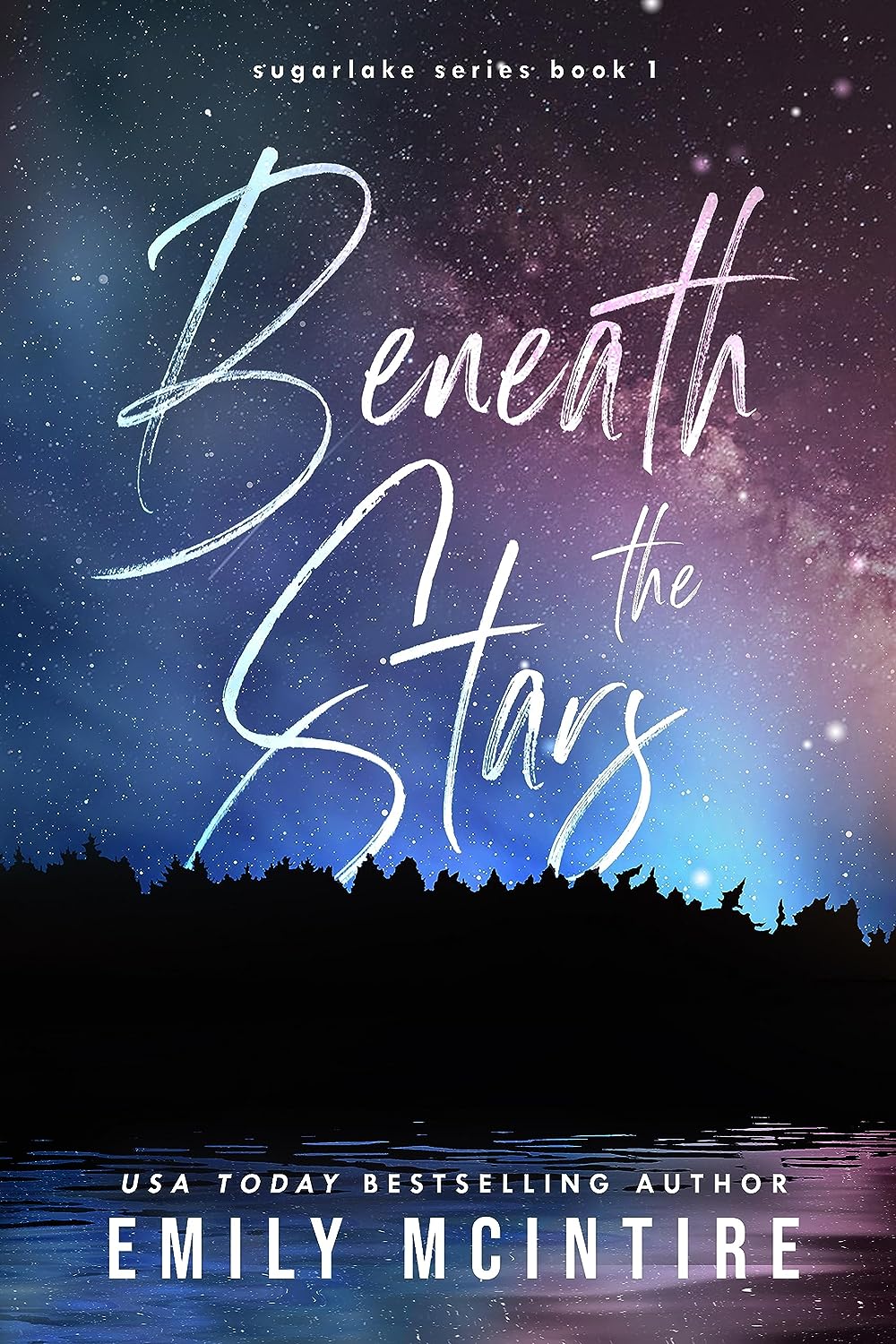
Beneath the Stars by Emily McIntire opens the Sugarlake series with the emotionally complicated story of Alina Carson and Chase Adams, two people whose connection begins when they are young and follows them through friendship, loss, separation, regret, and eventually the possibility of a second chance. Their story is tender in some places and devastating in others, especially when grief and abandonment begin shaping decisions neither character is emotionally prepared to handle.
This book hit me harder than I expected. McIntire allows Alina and Chase to make frustrating choices without reducing either of them to the villain of the relationship, and that emotional messiness made the story feel painfully human.
The portrayal of grief is particularly strong. Losing a parent changes the emotional direction of the story in ways that feel raw rather than convenient, and there were moments when the family loss and its aftermath genuinely brought me to tears.
At the center of all that pain is a relationship that has always represented safety for both characters, even when neither knows how to protect it. Alina and Chase repeatedly lose their way, but the history between them creates enough emotional gravity that I never stopped hoping they would eventually find a healthier path back to each other.
Beneath the Stars Quick Review
Beneath the Stars is an emotional contemporary romance built around childhood friendship, best friend’s brother, second chances, small-town history, grief, abandonment, and the difficult process of forgiving someone who once mattered enough to cause lasting damage. Alina and Chase know each other long before they are ready for a romantic relationship, which gives their eventual connection years of emotional history beneath the attraction.
What worked especially well for me is that their problems do not come from one simple misunderstanding. Chase carries deep insecurity rooted in abandonment, while Alina experiences grief and loss that change how she understands the people she loves, so both characters enter adulthood carrying wounds that affect how they handle closeness.
The romance is also much more than a straightforward story of childhood friends eventually realizing they belong together. Chase leaves, years pass, and their reunion forces both of them to confront whether love can survive not only separation but also the damage caused by the choices they made when they were younger.
The result is a story that can be heartbreaking and frustrating at the same time. I found myself rooting for Chase and Alina while also wanting to shake them when fear, guilt, or old habits pushed them toward decisions that made everything harder.
Beneath the Stars Summary
Alina Carson first meets Chase Adams when she is eleven years old. He is her best friend’s brother, which immediately places boundaries around their connection, but their early relationship develops through friendship and the kind of emotional intimacy that comes from sharing parts of themselves they do not easily reveal to everyone else.
Chase carries abandonment wounds that make trust difficult. Even when he is drawn toward Alina’s kindness and warmth, letting someone close means risking the possibility that she might eventually leave too, so emotional distance becomes a form of self-protection.
Alina sees something beneath that guarded exterior. She is fascinated by Chase from the beginning, but their early connection is not framed as a fully formed romance because they are still young and growing into the people they will eventually become.
One of the most memorable images from their early relationship involves Chase sharing secrets beneath the glow of stick-on stars. Those moments create a private emotional world between them, giving their connection a tenderness that becomes even more significant once life grows more complicated.
As Alina and Chase get older, the feelings between them become harder to categorize as simple friendship. Chase eventually decides to stop resisting the connection, allowing himself to believe that what exists between them might be worth the risk of becoming vulnerable.
Then tragedy changes everything.
The loss sends Chase back toward the coping mechanisms he understands best, and instead of remaining present with Alina through the pain, he disappears from her life. His abandonment does not erase what they shared, but it leaves Alina carrying the consequences of loving someone who walked away when she needed him.
Years pass before Chase returns.
He is older and finally willing to confront at least some of the mistakes that defined his younger self. Returning to Sugarlake means facing the people he left behind, but Alina is the person whose forgiveness matters most because she is also the person he hurt most deeply.
Circumstances place them together again through work, making distance difficult to maintain. The old connection resurfaces, but so do the memories of why trusting Chase once ended in heartbreak.
For Alina, the reunion is not simply about whether she still loves him. She has to decide whether the man standing in front of her has genuinely changed enough to deserve another chance or whether opening that door will only recreate the pain she already survived.
Chase has to prove something equally difficult. Wanting Alina back is not enough, because regret means very little unless it leads to different choices when vulnerability becomes frightening again.
Their second chance therefore depends on more than chemistry. Both characters have to confront grief, insecurity, family history, abandonment, and the emotional patterns that once convinced Chase that disappearing was easier than staying.
Alina Carson
Alina has a warmth that makes Chase’s attachment to her understandable from the beginning, but she is not simply the patient heroine waiting for a wounded man to decide he is ready for love. Her own experiences with grief and loss shape the way she understands relationships, family, and the danger of depending too heavily on someone who might disappear.
Her connection with Chase begins when she is young, which allows the story to establish emotional intimacy before the adult romance develops. She knows parts of him other people do not, and that history makes his later abandonment hurt in a way that a short-lived relationship never could.
Alina’s grief becomes one of the most affecting parts of the story. McIntire does not treat loss as something a character experiences for a chapter before returning to normal, because the absence continues influencing Alina’s emotional world long after the immediate shock has passed.
That portrayal felt especially authentic to me. Grief often changes ordinary moments rather than arriving only in dramatic scenes, and the book captures the way loss can quietly reshape relationships, routines, and the expectations a person carries into the future.
Alina’s eventual reunion with Chase requires strength rather than simple forgiveness. Loving someone from the past does not mean she owes him immediate access to the person she has become, and the second-chance romance works because she has legitimate reasons to protect herself.
Her emotional growth involves allowing herself to want something without pretending the risks have disappeared. That makes her eventual decisions feel more meaningful because she is not returning to Chase as the girl who once trusted him automatically.
Chase Adams
Chase is emotionally complicated because his worst decisions grow out of wounds that make sense without excusing the damage those decisions cause. Abandonment has taught him to expect loss, so keeping people at a distance can feel safer than trusting them enough to hurt him.
Alina becomes an exception long before Chase knows what to do with that exception. He shares private parts of himself with her because she makes him feel safe, but that safety also increases what he stands to lose if their relationship ever ends.
That fear becomes one of the defining contradictions in his character. Chase wants connection while simultaneously creating the conditions that make lasting connection difficult, which means the very behavior meant to protect him from abandonment can cause him to abandon someone else.
His disappearance after tragedy is painful precisely because it reflects an established weakness rather than coming from nowhere. When life becomes emotionally overwhelming, Chase retreats into the pattern that has always helped him survive, even though this time survival comes at Alina’s expense.
The older Chase has to confront the consequences of that choice. Returning home does not automatically transform him into someone worthy of forgiveness, because he needs to demonstrate that he can stay when emotional discomfort becomes intense.
That is the part of his redemption I found most compelling. Chase does not simply need to say that he is sorry, because he has to prove that the man who once disappeared can now remain present when the relationship becomes frightening.
Alina and Chase’s Relationship
Alina and Chase have years of history beneath their romance, and that foundation gives their relationship emotional depth from the beginning. They are not strangers discovering compatibility for the first time, because they already understand parts of each other that were formed long before either was ready to build an adult relationship.
The best friend’s brother dynamic adds another boundary around their early connection. Chase is not simply another boy in Alina’s life, and the existing relationships around them make acting on their growing feelings more complicated than acknowledging attraction alone.
Their private conversations under the stick-on stars become especially meaningful because they represent the version of Chase that Alina knows before romance introduces larger expectations. He trusts her with the secrets beneath the guarded exterior, and those moments establish why losing him later carries such emotional force.
The adult relationship becomes much more complicated because love does not erase Chase’s fear of abandonment. He can want Alina deeply and still sabotage the very connection he values when tragedy activates the emotional defenses he has spent years building.
That contradiction is frustrating, but it is also believable. People can love someone and still behave in ways that make sustaining that love impossible, especially when trauma has taught them to treat vulnerability as danger.
Their reunion years later turns the romance into a question of change rather than destiny. The history between them explains why the attraction survives, but only growth can determine whether the relationship deserves another future.
The Best Friend’s Brother Connection
The best friend’s brother element gives Alina and Chase an immediate history that shapes the romance before it properly begins. Their lives overlap naturally, which allows familiarity to grow without requiring an artificial reason for them to continue seeing each other.
That familiarity creates both comfort and restriction. Alina can get close enough to understand Chase in ways other people do not, but the family connection also reinforces the idea that wanting more might create complications far beyond the two of them.
The trope works particularly well because it is not the only source of conflict. Once Alina and Chase become older, the greater obstacles come from grief, abandonment, emotional avoidance, and the damage created by Chase’s disappearance.
That keeps the relationship from feeling dependent on one familiar romance device. The best friend’s brother element establishes the connection, while the characters’ emotional histories determine whether that connection can survive adulthood.
The Stick-On Stars and Emotional Intimacy
The moments beneath the stick-on stars are among the most memorable pieces of the relationship because they symbolize a kind of emotional safety Chase rarely allows himself. In that private space, he can tell Alina things he keeps hidden from other people, which makes their connection feel intimate before it ever becomes romantic.
Those scenes also explain why Alina sees more in Chase than the guarded behavior he shows elsewhere. She knows the vulnerable person underneath the defenses, which makes it difficult for her to reduce him entirely to the man who eventually leaves.
For Chase, those conversations represent a risk he does not usually take. Every secret shared gives Alina greater emotional access, and greater access means she becomes capable of hurting him in exactly the way he fears.
That tension follows their relationship into adulthood. Chase wants the closeness those early moments created, but sustaining that intimacy requires him to stop treating vulnerability as something he can escape whenever life becomes painful.
Grief Changes the Shape of the Story
Grief is one of the strongest elements in Beneath the Stars, and it gives the romance much of its emotional weight. Losing a parent is not treated as a convenient source of sadness but as an event that changes how the characters experience family, security, memory, and the future.
The portrayal hit me particularly hard because the grief does not always arrive neatly. There are moments where pain seems manageable and others where it resurfaces with enough force to disrupt everything around it, which feels painfully true to the way loss often works.
Tragedy also exposes the difference between how Alina and Chase handle suffering. Their connection may be strong, but emotional closeness does not automatically mean they know how to grieve together.
Chase responds by retreating, while Alina is left to process both the original loss and his disappearance. That compounds the damage because she does not simply lose one source of stability at a difficult moment.
The emotional consequences continue long enough to shape their eventual reunion. Years later, the second chance cannot work unless both characters acknowledge that grief changed them and that pretending otherwise would only recreate the problems that separated them.
Abandonment Shapes Chase’s Choices
Chase’s fear of abandonment is one of the most important forces behind his behavior. Growing up with that insecurity teaches him to approach closeness carefully, because trusting another person means accepting that they may eventually leave.
The tragedy of his character is that this fear does not prevent abandonment. Instead, it helps turn Chase into the person who walks away, repeating the very behavior that wounded him.
That pattern gives his disappearance more psychological weight. Chase does not leave because Alina suddenly stops mattering, but because caring about her makes the emotional stakes so high that retreat becomes his familiar response to overwhelming pain.
Understanding the pattern does not erase the consequences. Alina still has every right to be hurt, angry, and skeptical when he eventually returns wanting another chance.
The second-chance romance becomes stronger because Chase has to break the cycle through behavior rather than promises. If he wants a future with Alina, he has to demonstrate that fear no longer automatically sends him running.
The Second Chance Requires More Than Love
One of the reasons I enjoyed the second-chance element is that the story does not treat enduring feelings as sufficient evidence that Alina and Chase belong together. Loving someone across years of separation can explain why the connection remains powerful, but it cannot repair the damage by itself.
Chase needs accountability.
Alina needs enough confidence to protect herself without allowing past pain to dictate every future choice.
Both characters need to understand that returning to the relationship cannot mean recreating the younger versions of themselves who failed to survive tragedy together.
That makes their reunion about transformation rather than nostalgia. They may want to recover the connection they once had, but a lasting relationship requires building something capable of surviving pressures their earlier love could not handle.
The work setting helps intensify that process because they cannot rely entirely on distance. Being around each other again brings old feelings to the surface, but proximity also gives Alina opportunities to observe whether Chase has actually changed.
That evidence matters more than a dramatic declaration. A believable second chance comes from watching someone behave differently when confronted with the same emotional fears that once caused them to run.
Small-Town History Makes Escape Difficult
Sugarlake provides the kind of small-town setting where personal history does not disappear simply because someone leaves. Families remain connected, old relationships retain meaning, and returning home means confronting people who remember who you were before you became the person you are now.
That atmosphere suits Chase’s return particularly well. He cannot simply reinvent himself as a stranger because Alina and the people around them already know the choices that shaped his past.
For Alina, the familiar setting creates its own tension. The town contains memories of the relationship, the family connections surrounding it, and the losses that changed both characters.
That sense of shared history makes the romance feel rooted rather than isolated. Chase and Alina are not falling in love inside a vacuum, because their connection exists within a larger community that has watched parts of their lives unfold.
Working Together Forces the Past Into the Present
When Chase returns and circumstances place him alongside Alina through work, the story gains the forced proximity needed to make avoidance impossible. Neither character can simply rely on memories because they are confronted with the person the other has become.
That creates an important distinction between past love and present compatibility. Alina may still have feelings for Chase, but working together allows her to determine whether the adult version of him is capable of offering something the younger Chase could not.
The same is true for Chase. He has spent years living with regret, but returning to Alina means facing the reality that she continued growing while he was gone.
That proximity creates tension without requiring artificial conflict. Ordinary conversations become emotionally loaded because every interaction carries the memory of what happened before and the possibility of what might happen next.
Beneath the Stars Tropes and Genres
The strongest elements include:
- Contemporary romance
- Small-town romance
- Second-chance romance
- Best friend’s brother
- Childhood friendship
- Friends-to-lovers elements
- Long-term emotional connection
- Forced proximity
- Working together
- Abandonment wounds
- Grief
- Loss of a parent
- Family relationships
- Emotional healing
- Childhood secrets
- Unresolved love
- Personal growth
- Forgiveness
- Regret
- Vulnerable hero
- Emotional reunion
- Small-town history
- Angst
- Foundational friendship
- Love after loss
What I Loved About Beneath the Stars
The emotional history between Alina and Chase is the biggest strength for me. Their relationship has enough time and shared memory behind it that the adult romance feels like the continuation of something deeply rooted rather than an attraction that suddenly becomes important because the story needs it to.
I also loved the depiction of grief, even when it was difficult to read. The loss does not disappear once the plot moves forward, and the emotional consequences continue shaping relationships in ways that made several scenes hit much harder than I expected.
Chase’s flaws make him frustrating, but they also make his eventual return meaningful. He cannot simply arrive older, declare that he made a mistake, and expect Alina to erase everything that happened.
Alina’s response gives the second chance credibility because she has reasons to protect herself. Her lingering love does not automatically override the fact that Chase left when life became unbearable, and I appreciated that the story allows those two truths to exist together.
The childhood moments beneath the stick-on stars also stayed with me. They create a sense of intimacy that explains why these two people remain emotionally significant to each other even after years and heartbreak change everything around them.
Most of all, I loved how emotionally messy the book allows the characters to be. Their grief, insecurity, longing, and mistakes never fit into perfectly tidy categories, which is exactly why the eventual hope feels earned.
What Might Not Work for Every Reader
This is a heavy romance, particularly for readers sensitive to grief and parental loss. The story spends meaningful time with the emotional consequences of tragedy, so anyone looking for a light small-town romance should expect something considerably more intense.
Chase’s decision to disappear may also be difficult to forgive. His abandonment wounds explain why he retreats, but understanding the psychology behind a hurtful choice does not automatically make that choice easier to accept.
Some readers may become frustrated by how long emotional wounds continue influencing the characters. Alina and Chase are not people who solve years of insecurity with one honest conversation, and the book allows healing to remain uneven.
That slower emotional recovery worked for me because it felt believable. Readers who prefer quicker reconciliation and less angst may find the relationship more exhausting than satisfying.
The childhood history may also require some patience from readers who want the adult romance to begin immediately. The earlier connection is important because it establishes trust, secrecy, and emotional attachment long before the second-chance storyline can have its full impact.
Standalone Status and Series Placement
Beneath the Stars is the first installment in Emily McIntire’s Sugarlake series and introduces the small-town world that continues through later books. Alina and Chase’s relationship provides the central romantic story here, while the surrounding characters and family connections create the foundation for future installments.
Starting with this book gives the broader series additional emotional context because later characters already exist within the same interconnected world. The small-town structure means relationships overlap naturally, so the first installment does more than establish one couple.
The next book, Beneath the Stands, shifts the focus to Elliot “Eli” Carson and Rebecca “Becca” Sanger. Knowing the emotional atmosphere of Sugarlake before entering their story adds another layer to the way the series develops from couple to couple.
Reader Fit
Beneath the Stars should appeal to readers who enjoy emotional contemporary romance where the characters carry substantial history before the adult relationship fully develops. It is especially well suited to readers who like second chances, small towns, best friend’s brother, childhood friendship, grief, abandonment wounds, family relationships, and characters who have to grow before love becomes sustainable.
It should also work well for readers who appreciate romance that does not treat grief as a temporary obstacle. Alina and Chase’s story acknowledges that loss can permanently change people while still allowing them to build something hopeful after the worst parts of their lives.
Readers who enjoy flawed heroes may find Chase particularly compelling. His choices can be painful and frustrating, but the second chance has emotional weight precisely because he has so much to repair.
Beneath the Stars Review: Final Thoughts
Beneath the Stars is heartbreakingly gorgeous because it understands that love can be real long before two people are emotionally capable of protecting it. Alina and Chase build a connection when they are young, but knowing someone’s secrets and loving the vulnerable parts of them does not automatically prepare either person for the devastation that adulthood can bring.
Chase’s abandonment wounds shape nearly every part of his relationship with Alina. He wants the safety he finds with her, but that safety also creates something valuable enough to lose, which makes intimacy frightening for someone who already expects people to disappear.
Alina gives him a place to be vulnerable beneath those stick-on stars, and that image becomes especially poignant once he later becomes the person who leaves. The boy who feared abandonment grows into a man whose own fear causes him to inflict a similar wound on someone he loves.
That contradiction made Chase difficult to forgive at times, but it also made him interesting. His return only works because the book recognizes that regret is the beginning of accountability rather than the end of it.
Alina cannot simply become the reward waiting for him after he decides he is ready to confront the past. She has lived through his absence, experienced grief of her own, and become someone whose trust deserves to be earned rather than assumed.
Their reunion therefore carries years of emotional weight. Every interaction contains both the tenderness of what they once shared and the pain of knowing how badly that relationship eventually failed them.
For me, the grief is what elevates the story beyond a familiar second-chance romance. The loss does not exist merely to separate the characters, because it changes how both of them understand love, safety, family, and themselves.
The book captures how grief can make people act in contradictory ways. Someone can desperately need connection while pushing people away, and another person can remain deeply in love while knowing that allowing someone back into her life may be dangerous.
That complexity made Alina and Chase feel more human to me. I did not agree with every choice they made, but I understood enough about where those choices came from to stay emotionally invested.
The small-town setting adds another dimension because neither character can completely separate the past from the present. Sugarlake holds their memories, families, relationships, and mistakes, so returning home means facing much more than one unfinished romance.
Their eventual hope comes from accepting that healing does not require forgetting what happened. Chase still made choices that hurt Alina, and Alina still carries the consequences, but neither has to remain permanently defined by the worst period of their lives.
That is the part of Beneath the Stars that stayed with me most. Second chances become meaningful when they are not attempts to erase the past but opportunities to respond differently to it.
Alina and Chase cannot become the people they were before tragedy changed them. They can only decide whether the people they are now are finally capable of choosing one another without allowing fear to make every decision first.
The story is messy, painful, romantic, and hopeful in exactly the right proportions. By the time I reached the end, I felt emotionally wrung out, but I also understood why this was the right book to open the Sugarlake series.
Beneath the Stars FAQ
What is Beneath the Stars by Emily McIntire about?
Beneath the Stars follows Alina Carson and Chase Adams, whose connection begins when they are young and develops through friendship, secrets, love, tragedy, separation, and eventually a second chance. After Chase disappears from Alina’s life following a devastating loss, he returns years later determined to confront his past and repair the relationship he abandoned.
Is Beneath the Stars a second-chance romance?
Yes. Alina and Chase develop a deep connection before tragedy and Chase’s emotional retreat separate them, leaving years of unresolved feelings between them.
Their reunion becomes a true second chance because love alone is not enough to repair the relationship. Chase has to demonstrate growth, while Alina has to decide whether forgiving him is compatible with protecting herself.
Is Beneath the Stars a best friend’s brother romance?
Yes. Chase is Alina’s best friend’s brother, which adds another layer of familiarity and complication to their relationship.
The trope is especially effective because the characters have known each other from a young age. Their adult romance grows from years of emotional history rather than beginning with a sudden attraction between strangers.
Is Beneath the Stars a small-town romance?
Yes. Sugarlake provides the small-town setting, and the interconnected relationships surrounding Alina and Chase give their romance a strong sense of shared history.
The town matters because leaving does not erase the past. Chase’s eventual return places him back among people and memories connected to the choices he made before he left.
Does Beneath the Stars deal with grief?
Yes. Grief and parental loss are major emotional elements, and the book explores how tragedy can alter relationships, identity, and the ability to trust other people.
The grief is not treated as a brief plot device. Its consequences continue shaping Alina and Chase long after the immediate loss, which gives the second-chance romance much of its emotional weight.
Who is Alina Carson?
Alina Carson is the heroine whose connection with Chase begins when she is young. She becomes someone he trusts deeply, but his eventual disappearance forces her to live with the consequences of losing both the relationship and the emotional safety it once represented.
Her journey involves grief, forgiveness, and deciding whether love from the past deserves a place in her future. She also has to distinguish lingering feelings from genuine evidence that Chase has changed.
Who is Chase Adams?
Chase Adams is Alina’s best friend’s brother and a man shaped by abandonment and insecurity. His fear of being left makes emotional vulnerability difficult, even though Alina becomes one of the few people he trusts with his deepest secrets.
After tragedy strikes, Chase returns to old coping patterns and disappears from Alina’s life. Years later, he comes back ready to confront what he did and attempt to repair the damage.
Does Beneath the Stars have childhood friends-to-lovers elements?
Yes. Alina and Chase form an important emotional connection when they are young, sharing secrets and developing trust long before their adult romance becomes central.
The childhood relationship gives the later love story additional depth. Their eventual attraction feels connected to years of familiarity rather than appearing without an emotional foundation.
Is Beneath the Stars part of the Sugarlake series?
Yes. Beneath the Stars is the first installment in Emily McIntire’s Sugarlake series and introduces the small-town world and interconnected characters that continue into later books.
The second installment, Beneath the Stands, shifts focus to Eli Carson and Becca Sanger. Beginning with Beneath the Stars provides the natural introduction to the broader Sugarlake setting.
What are the main tropes in Beneath the Stars?
The strongest elements include second-chance romance, best friend’s brother, childhood friendship, small-town romance, friends-to-lovers elements, forced proximity, grief, abandonment wounds, emotional healing, unresolved love, family relationships, and forgiveness. The combination creates a romance that is much heavier and more emotional than a lighthearted small-town love story.
Who should read Beneath the Stars?
Readers who enjoy emotional contemporary romance, small towns, second chances, childhood connections, best friend’s brother, grief, flawed heroes, and relationships shaped by years of history should connect strongly with Alina and Chase. It is particularly well suited to readers who do not mind being frustrated with characters as long as their mistakes are tied to believable emotional wounds and meaningful growth.