
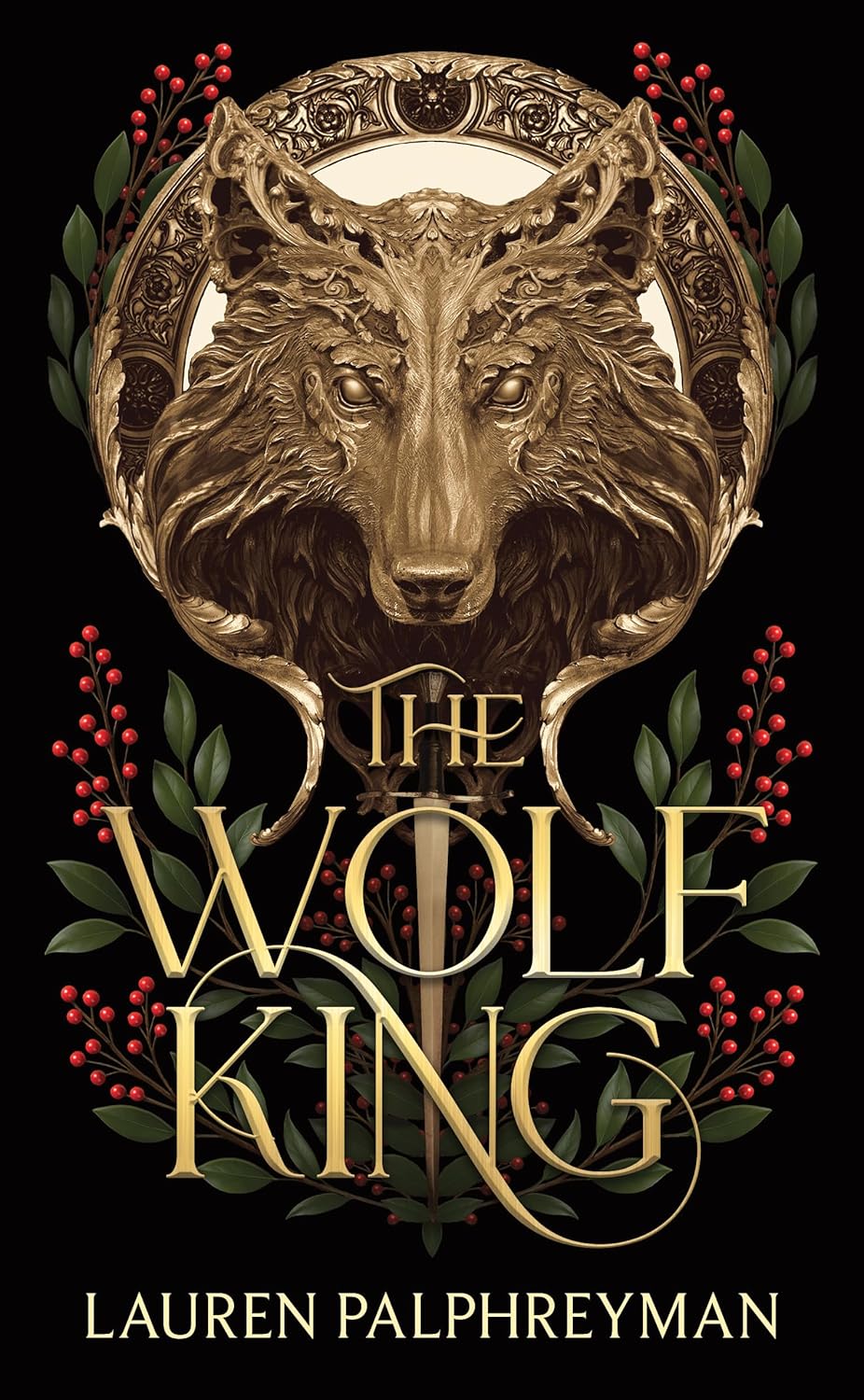
The Wolf King by Lauren Palphreyman is a dark, immersive fantasy romance that blends political intrigue, forbidden attraction, and a fierce struggle for autonomy into a richly atmospheric narrative. From its opening pages, the novel establishes a world where cruelty is institutionalized, power is wielded without compassion, and survival often requires silence. Against this brutal backdrop, Palphreyman crafts a story that is as much about reclaiming agency as it is about love.
The novel introduces Aurora, a princess raised not to rule, but to be useful. Her value lies in her obedience, her beauty, and her ability to secure alliances through marriage. Promised to Lord Sebastian, a man whose cruelty hides beneath civility, Aurora exists in a gilded prison where her voice carries no weight. She has been trained to endure, to suppress her instincts, and to accept that her life will never truly belong to her.
This emotional repression makes Aurora a compelling heroine. She is not naïve, nor is she unaware of the dangers surrounding her. She understands the violence of her world intimately, yet refuses to let it harden her completely. Her compassion for the Wolves, creatures her kingdom deems monsters, sets her apart from those around her and quietly establishes the moral core of the story.
The Wolves themselves are introduced through scenes that are intentionally uncomfortable. Forced to fight for entertainment, caged and brutalized, they are stripped of dignity and autonomy. Palphreyman does not soften these moments, and the effect is powerful. The reader is made to confront how easily oppression is justified when those suffering are labeled as less than human.
The Wolf King enters the narrative not as a romantic ideal, but as a dangerous, commanding presence. He is an alpha shaped by war, captivity, and responsibility. His strength is undeniable, but it is tempered by restraint and a deep awareness of the cost of violence. Unlike the men who rule Aurora’s kingdom, his brutality is never casual. It is survival-driven, not indulgent.
The tension between Aurora and the Wolf King builds slowly, rooted in mistrust and ideological conflict rather than instant attraction. Their early interactions are charged with anger, defiance, and unspoken understanding. Aurora challenges him openly, refusing to excuse his violence even when it is forced upon him. He challenges her worldview, exposing the limits of idealism in a world that devours the weak.
This push and pull creates a compelling emotional dynamic. Neither character is presented as morally flawless. Both are shaped by the systems that oppress them, and both must confront uncomfortable truths about themselves. The romance grows not from fantasy, but from shared recognition of captivity and the longing for freedom.
One of the novel’s greatest strengths lies in its exploration of choice. Aurora’s journey is not about being rescued. It is about choosing, again and again, to act despite fear. Her decisions carry consequences, and the story never pretends otherwise. Freedom, in The Wolf King, is not clean or easy. It is dangerous, bloody, and often morally complex.
The political intrigue woven throughout the story adds depth and tension. The conflict between the southern kingdom and the Wolf clans is not painted in simple terms of good versus evil. Instead, Palphreyman presents a world shaped by centuries of violence, propaganda, and fear. Power is shown to corrupt quietly, through tradition and convenience, rather than overt villainy alone.
The pacing of the novel is deliberate. Action scenes are intense and visceral, while quieter moments allow characters to breathe and reflect. This balance keeps the story engaging while giving emotional weight to the relationships and choices that drive the plot.
The romance itself is slow-burning and emotionally charged. It is built on trust earned under extreme circumstances, not destiny or convenience. Physical attraction exists, but it never overshadows the emotional stakes. Consent, choice, and respect are central to their evolving bond, making the romance feel grounded even within a fantastical setting.
By the time the story reaches its later stages, Aurora has transformed in subtle but profound ways. She does not become fearless or invincible. Instead, she becomes willing to claim her own desires, even when doing so terrifies her. The Wolf King, too, is forced to confront the limits of strength without compassion and leadership without trust.
The Wolf King is a dark, emotionally resonant fantasy romance that does not shy away from brutality or moral complexity. It is a story about power, resistance, and the cost of freedom, anchored by a heroine whose courage grows from compassion rather than conquest. Lauren Palphreyman delivers a compelling narrative that will resonate with readers who appreciate layered characters, slow-burn romance, and fantasy worlds that reflect the harsh realities of control and survival.
For readers drawn to stories where love is forged in defiance and freedom must be fought for, The Wolf King offers a gripping and thought-provoking journey.
The five best things about The Wolf King
1. A Powerful, Gradual Character Arc for the Heroine
Aurora’s growth is one of the novel’s greatest strengths. She does not transform overnight into a fearless warrior. Instead, her courage builds slowly through compassion, moral resistance, and difficult choices. Her journey from silent endurance to active defiance feels realistic, earned, and emotionally impactful.
2. A Dark, Thoughtful Exploration of Power and Oppression
The book does not shy away from depicting cruelty, but it never uses violence as empty spectacle. The treatment of the Wolves, the politics of captivity, and the normalization of brutality all serve to examine how systems of power dehumanize others. This thematic depth gives the story weight beyond the romance.
3. A Slow-Burn Romance Rooted in Trust and Choice
The relationship between Aurora and the Wolf King develops through tension, conflict, and mutual recognition rather than instant attraction or fate. Their bond grows because both characters challenge each other’s beliefs and earn trust under extreme circumstances, making the romance feel grounded and compelling.
4. A Morally Complex and Compelling Romantic Lead
The Wolf King is neither a traditional hero nor a softened monster. He is shaped by violence, responsibility, and survival, and his restraint is as defining as his strength. His leadership and internal conflict add nuance, making him an engaging and believable counterpart to Aurora.
5. Immersive World-Building with Real Consequences
The political intrigue, entrenched traditions, and long-standing conflict between humans and Wolves create a world that feels dangerous and lived-in. Choices have consequences, alliances are fragile, and freedom is never guaranteed, which keeps the stakes high and the narrative gripping.