
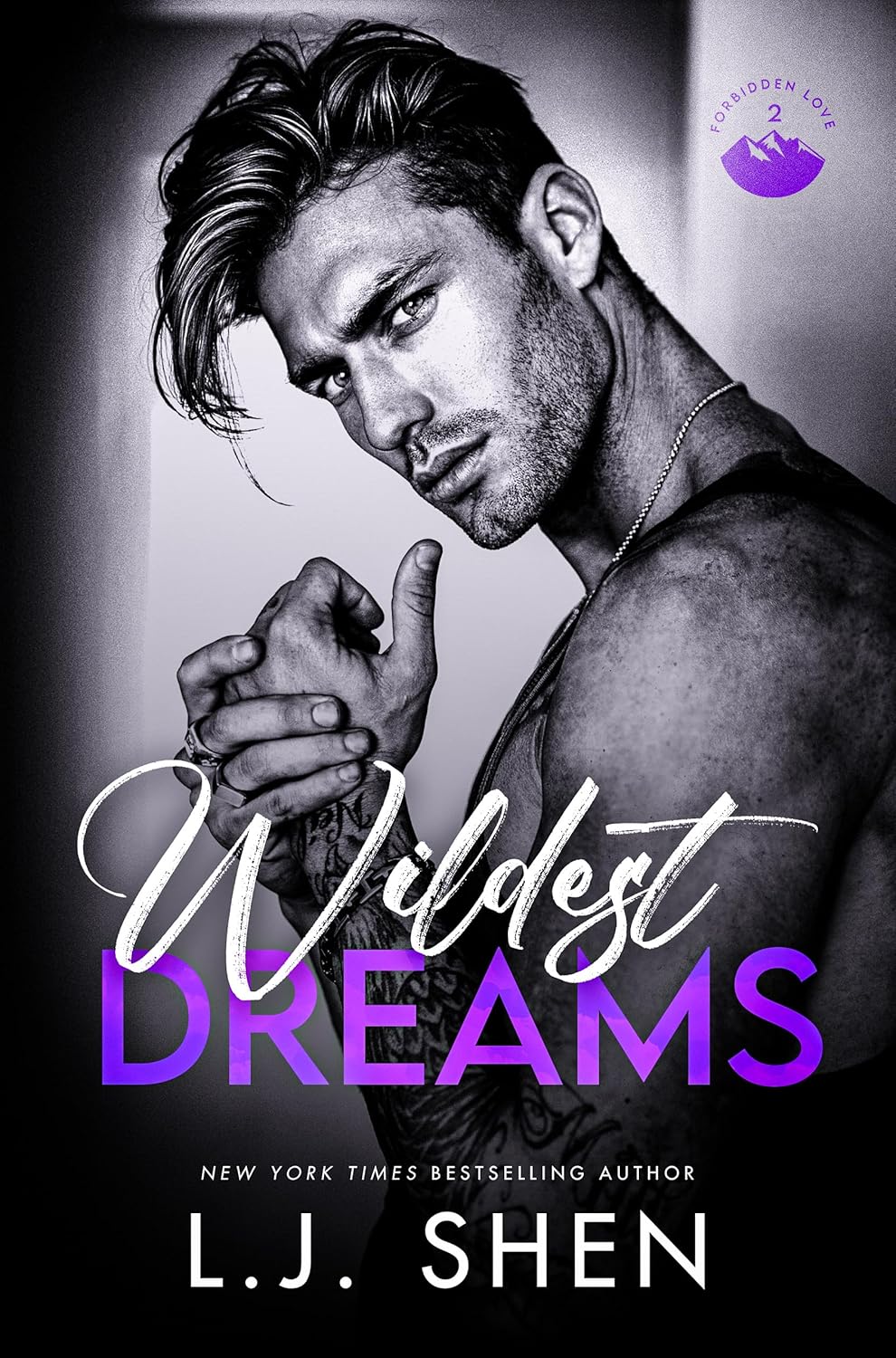
Wildest Dreams by L.J. Shen is a bold, emotionally layered romance that fully embraces its title. This novel dives headfirst into desire, chaos, and vulnerability, delivering a story that is as sharp and provocative as it is unexpectedly heartfelt. As the second installment in the Forbidden Love series, it raises the stakes both emotionally and narratively, offering readers a relationship built on tension, temptation, and the dangerous thrill of wanting what you should not have.
At the center of the story are Dylan Casablancas and Rhyland Coltridge, two characters who feel combustible from the moment they share the page. Their dynamic is rooted in long standing animosity, unresolved attraction, and proximity that refuses to give either of them room to breathe. Dylan is a single mother trying to rebuild her life after disappointment, abandonment, and a series of choices that forced her to grow up faster than she ever wanted. She carries responsibility like armor, protecting her daughter with ferocity while quietly denying herself any sense of desire or indulgence.
Rhyland, on the other hand, is the embodiment of excess and recklessness. He is unapologetically indulgent, emotionally detached, and painfully aware of the power he holds over others. He thrives on chaos and pleasure, using charm and arrogance as both shield and weapon. As the best friend of Dylan’s brother, he exists firmly in the category of forbidden, not only because of social rules but because he represents everything Dylan believes she should avoid. That tension is not subtle, and L.J. Shen does not try to make it so.
What makes Wildest Dreams compelling is how unapologetically messy it allows its characters to be. Dylan is not written as a saint or a martyr. She is overwhelmed, exhausted, and often insecure. Her internal monologue reflects the reality of a woman who feels trapped between responsibility and resentment, longing and guilt. Her love for her daughter is absolute, but that love does not erase her loneliness or her frustration at a life that feels smaller than it should.
Rhyland is equally flawed, though in different ways. He is self-aware enough to recognize his moral shortcomings, yet rarely interested in correcting them. His worldview is transactional, shaped by years of indulgence and emotional detachment. Yet beneath the bravado lies a man deeply uncomfortable with intimacy that cannot be controlled. His attraction to Dylan threatens that control, forcing him into emotional territory he would rather avoid.
The fake relationship trope is used as a narrative catalyst rather than a gimmick. What begins as a mutually beneficial arrangement quickly spirals into something far more volatile. Shen excels at showing how blurred lines form when physical desire and emotional need collide. The characters may insist on rules, boundaries, and temporary terms, but the emotional undercurrent is impossible to ignore. Every interaction crackles with tension, layered with sarcasm, resentment, and unspoken longing.
One of the novel’s strongest elements is its treatment of power dynamics. The age gap, the difference in life experience, and the imbalance between emotional availability and detachment are all acknowledged within the story. Shen does not romanticize these imbalances without consequence. Instead, she explores how they complicate consent, vulnerability, and trust. Dylan is keenly aware of the risks involved in giving any part of herself to Rhyland, while Rhyland struggles with the reality that control does not equal safety.
Motherhood is woven seamlessly into Dylan’s arc, not as a limitation but as a defining part of her identity. Her daughter is not a background prop or a convenient plot device. She is central to Dylan’s decisions, fears, and sense of self. This grounding presence adds emotional weight to every choice Dylan makes, particularly when desire threatens to pull her in directions she believes she cannot afford to explore.
Shen also uses humor effectively throughout the story, often through biting banter and sharp internal commentary. The dialogue between Dylan and Rhyland is fast-paced, confrontational, and frequently laugh-out-loud funny. This levity provides balance to the heavier emotional moments, preventing the story from becoming overly grim while still allowing space for vulnerability.
The pacing of Wildest Dreams is deliberate, allowing tension to build rather than explode prematurely. Emotional beats are given room to breathe, and moments of connection are often followed by doubt or self-sabotage. This push and pull reflects the characters’ internal struggles and reinforces the central theme of wanting something that feels dangerous precisely because it is real.
L.J. Shen’s writing style remains confident and unapologetic. She leans into morally gray territory without offering easy justifications or tidy resolutions. Characters make questionable decisions, say the wrong things, and hurt each other, sometimes unintentionally and sometimes not. That messiness is part of what makes the story feel honest. Love here is not presented as a cure-all, but as a risk that demands accountability.
The forbidden aspect of the romance is not limited to social rules. It extends into emotional territory that both characters fear. For Dylan, loving Rhyland means risking stability and control. For Rhyland, caring for Dylan means confronting parts of himself he has long avoided. Their relationship becomes a mirror, reflecting fears neither of them wants to face alone.
As a second book in the Forbidden Love series, Wildest Dreams stands confidently on its own while also expanding the emotional landscape of the series. It reinforces the idea that forbidden love is not just about circumstance, but about internal resistance to vulnerability and change. Shen continues to explore how love often arrives in forms that challenge identity rather than affirm it.
By the time the novel reaches its later chapters, the stakes feel earned. Emotional growth is hard won, and resolution feels like the result of effort rather than fate. Shen allows her characters to struggle, to fall short, and to choose again, which gives the conclusion its emotional impact.
Overall, Wildest Dreams is a provocative, emotionally intense romance that will resonate with readers who appreciate flawed characters, sharp dialogue, and stories that refuse to sanitize desire. It is unapologetically adult, deeply character-driven, and emotionally charged, delivering a love story that feels as reckless as it is sincere. Fans of L.J. Shen’s signature style will find everything they love here, while new readers will be introduced to a romance that is bold, raw, and impossible to ignore.